Chinese Diaries
By the end of the semester, I have no desire left to write the promised article on kinetics. I think I'd rather tell you about my recent trip to China and throw in some photos.
I had wanted to get to the Middle Kingdom for a very long time. I prepared for this undertaking, as some would say, fundamentally. My route included Beijing and Xiamen. The latter might seem like a rather random choice, but that's actually where the conference took place, which was the whole reason for the trip. Let me tell you in order.
Beijing
Anyone with minimal prior knowledge about planet Earth knows that China has long loved to do things on a grand scale. Now I've seen it with my own eyes and can confirm. Firstly, Daxing Airport itself (translated as 'big something') is enormous. Secondly, the highway from the airport to the center has up to 10 lanes in one direction in places. Taxi drivers cover the 45 kilometers in ~40 minutes.
I took the picture below as soon as I got out of the taxi. It was practically empty and meditatively quiet right in the very center of the city.
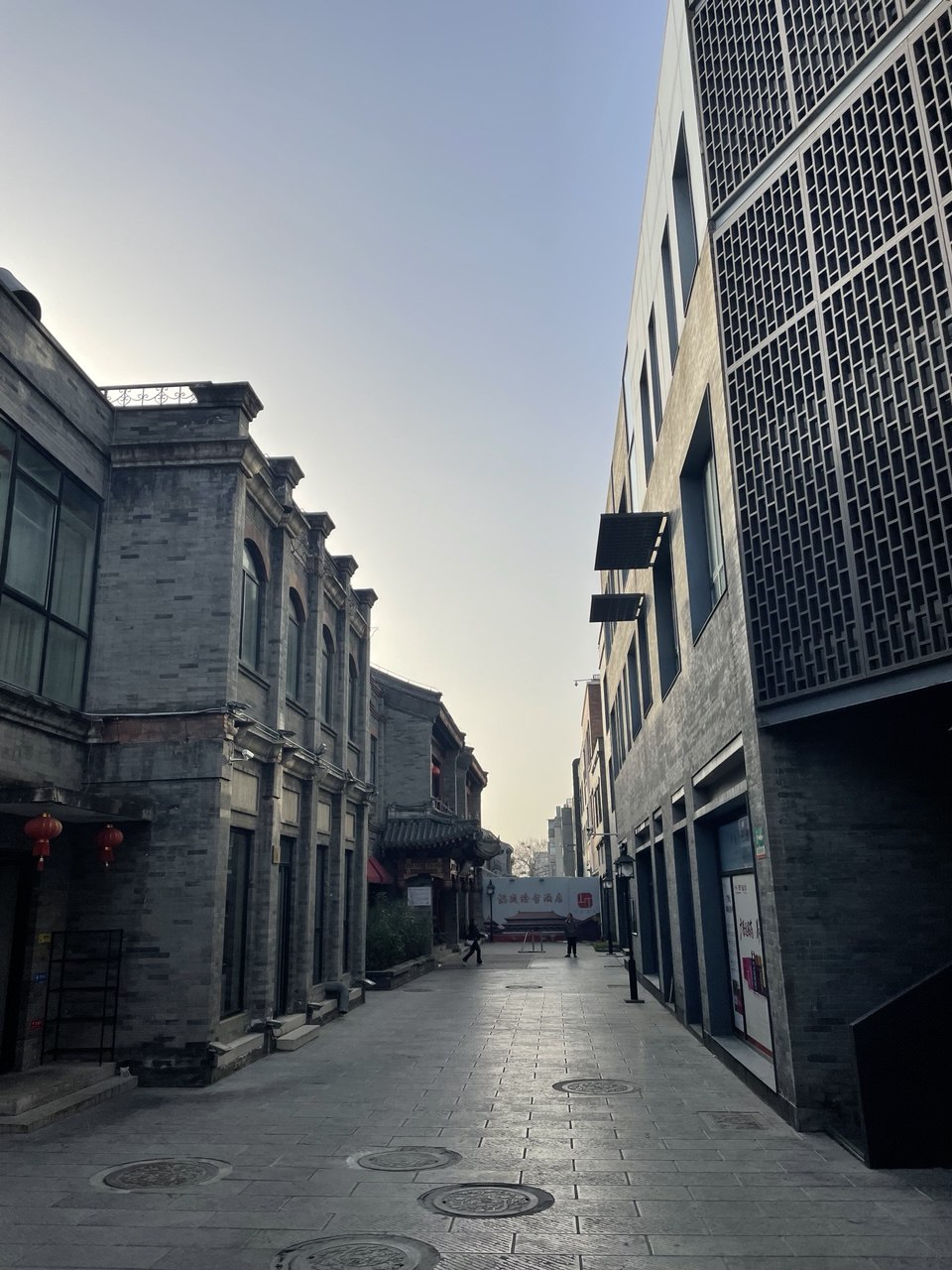
Yes, as you might have guessed, I arrived early in the morning; otherwise, there's no way to get the privilege of an empty city. Below, you can enjoy the view of the historic Qianmen Street. No, the horizon there is normal — it's the sign that's a little crooked.
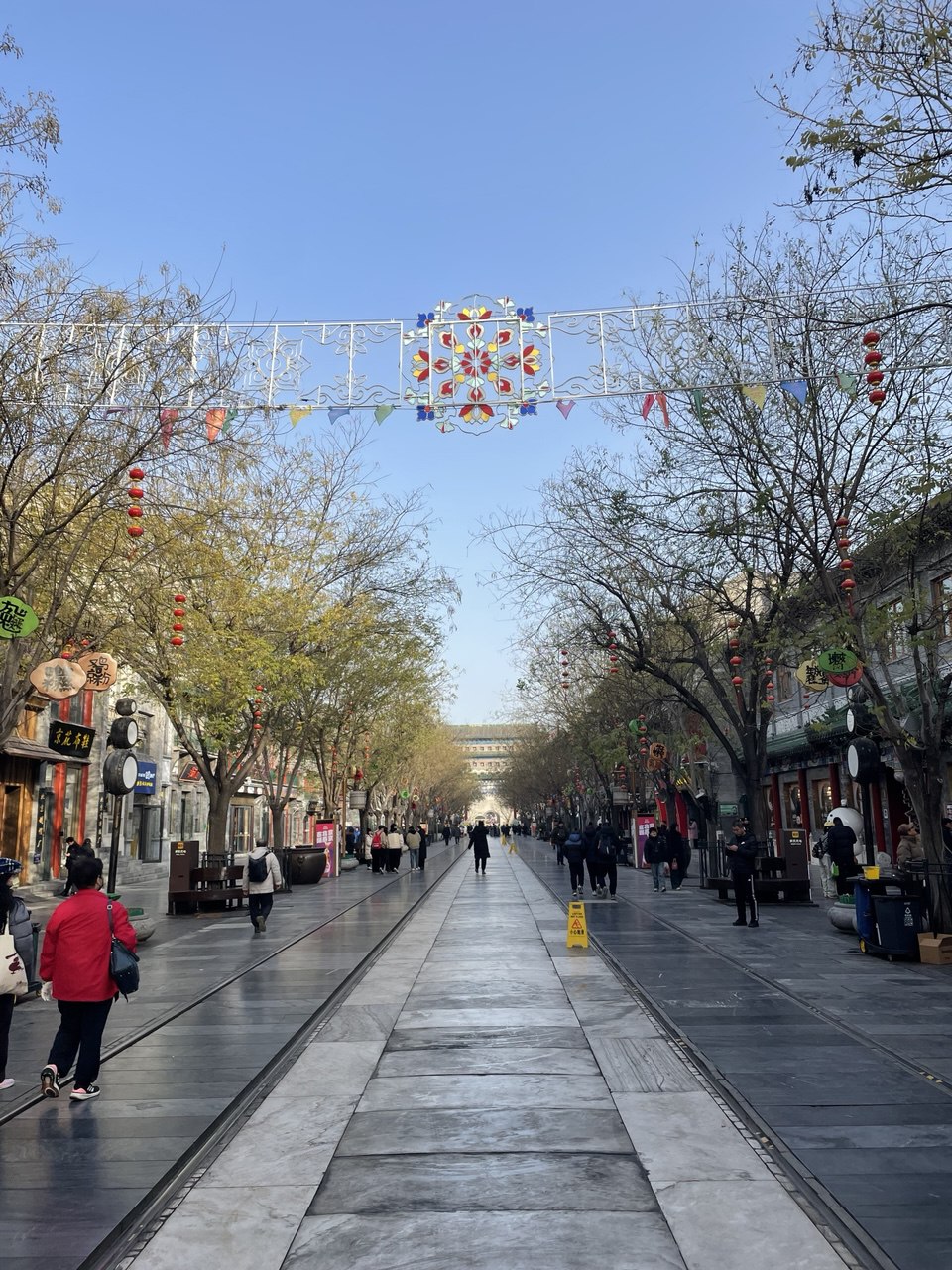
How do you think Beijing became the capital? The thing is, the capital was moved there based on the logic: "there are mountains around, so it will be difficult for enemies to pass, and inside the mountains, conveniently enough, there are also plenty of fields". If anyone has watched Mulan and remembers that the Huns had the task of capturing the capital, that's even historically accurate. Capture Beijing, then just travel across the plains, pillaging and killing...
Due to the mountain surroundings, Beijing often has smog, so I was very lucky! As you can see, the sky in the photos is clear.
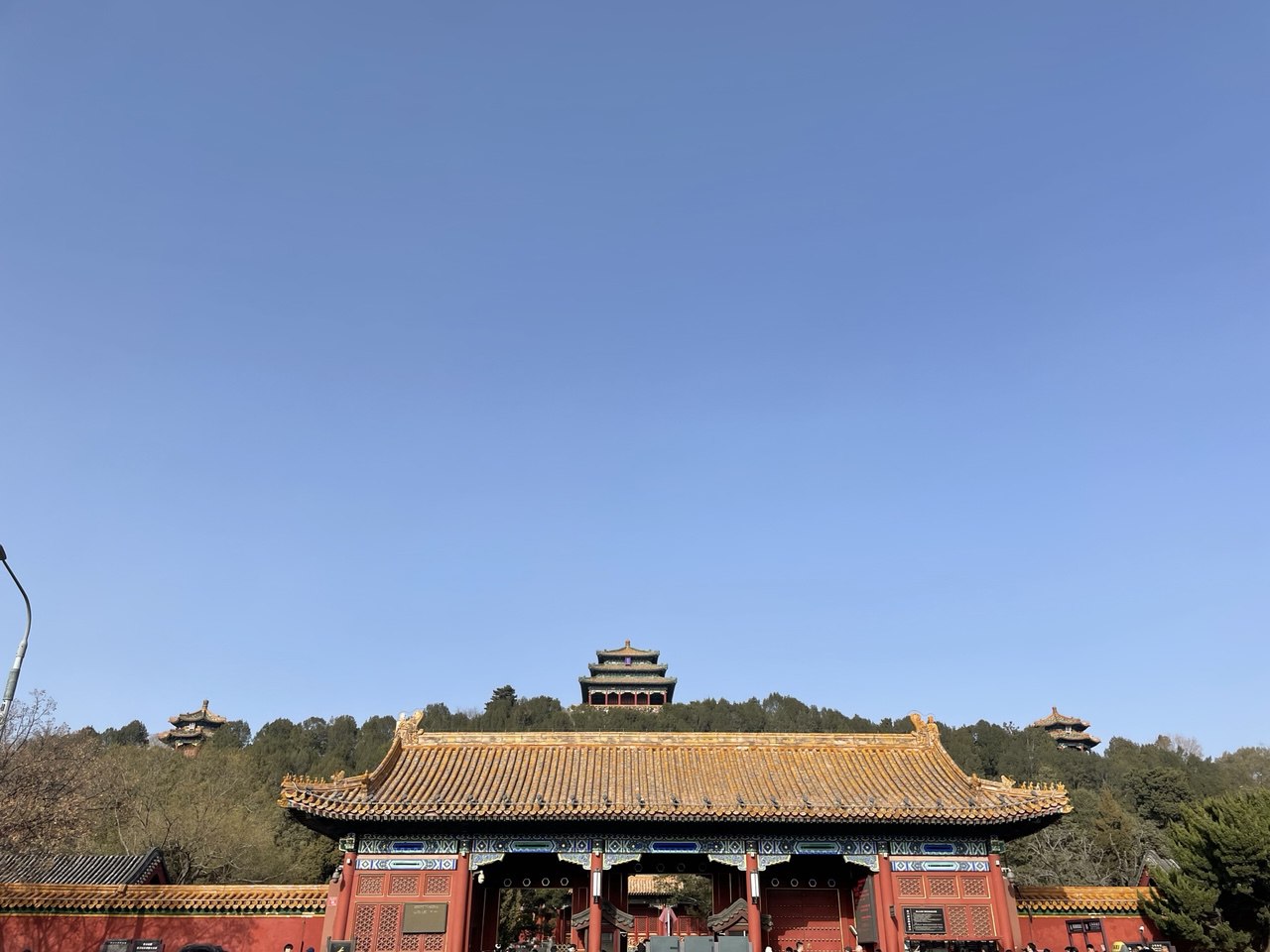
I haven't delved too deeply into Asian urban planning, but I know that Beijing has a so-called central axis. In my understanding, it's a road from the city gates to the palace (the Forbidden City), running from south to north. By that logic, Jingshan Park (see photo above) is located behind the palace.
I only had a day in the city, so I had to rush everywhere, and it's that time of the year when nothing is blooming. So I can't really tell much about the park. I only ran through its main spots — the five pavilions on the mountain, three of which are visible in the same photo above. Speaking of grand projects: the mountain in the photo is artificial. According to Wiki, the mountain was erected here because, according to feng shui, it's good practice to live south of a mountain))
From the central pavilion at the very top, there's a mind-blowing view of the Forbidden City (see photo below). Seriously: the palace complex is immense. Gargantuan.
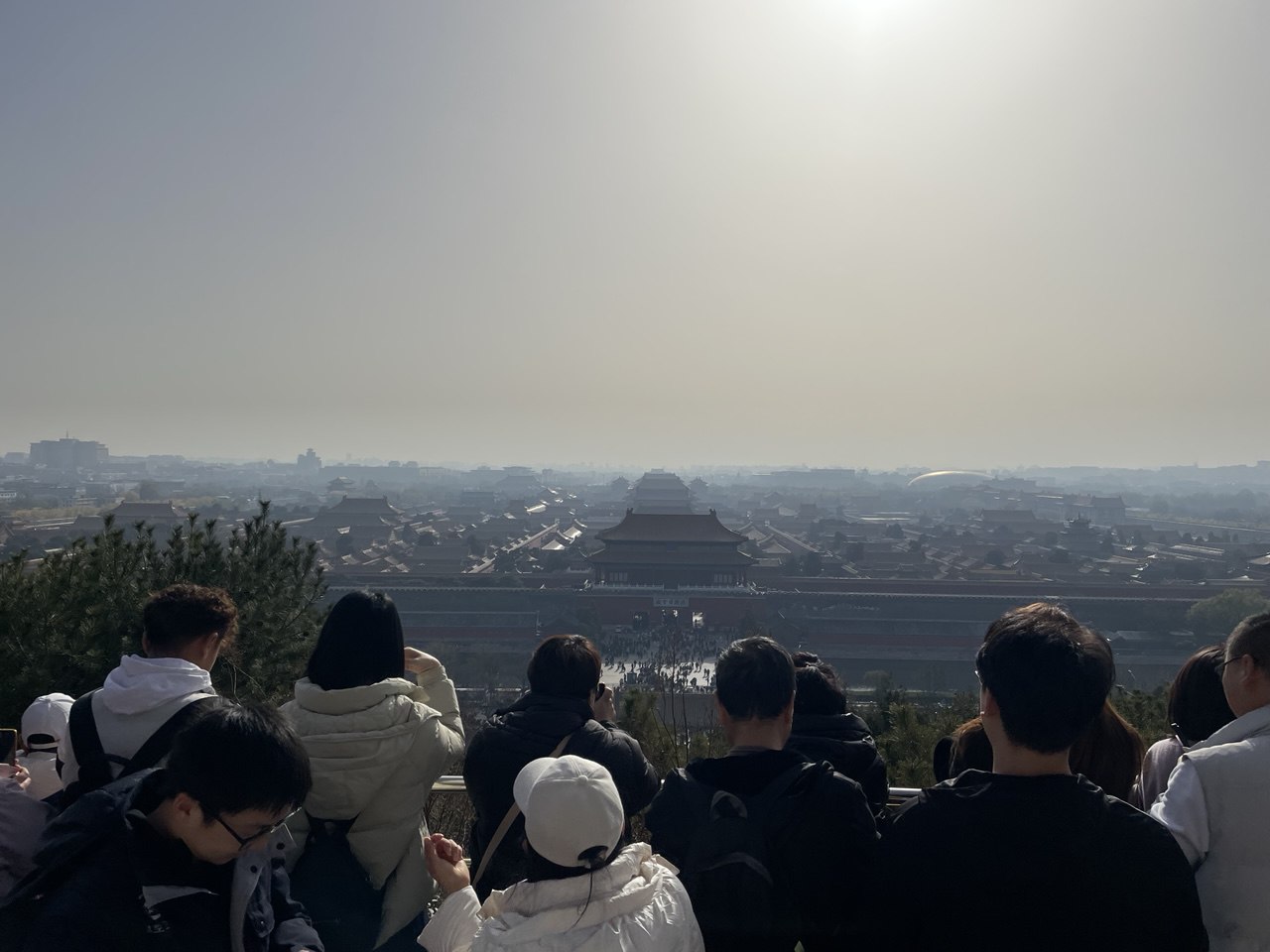
By the way, with a sufficiently long optical path, you can actually see the smog, as in the photo above.
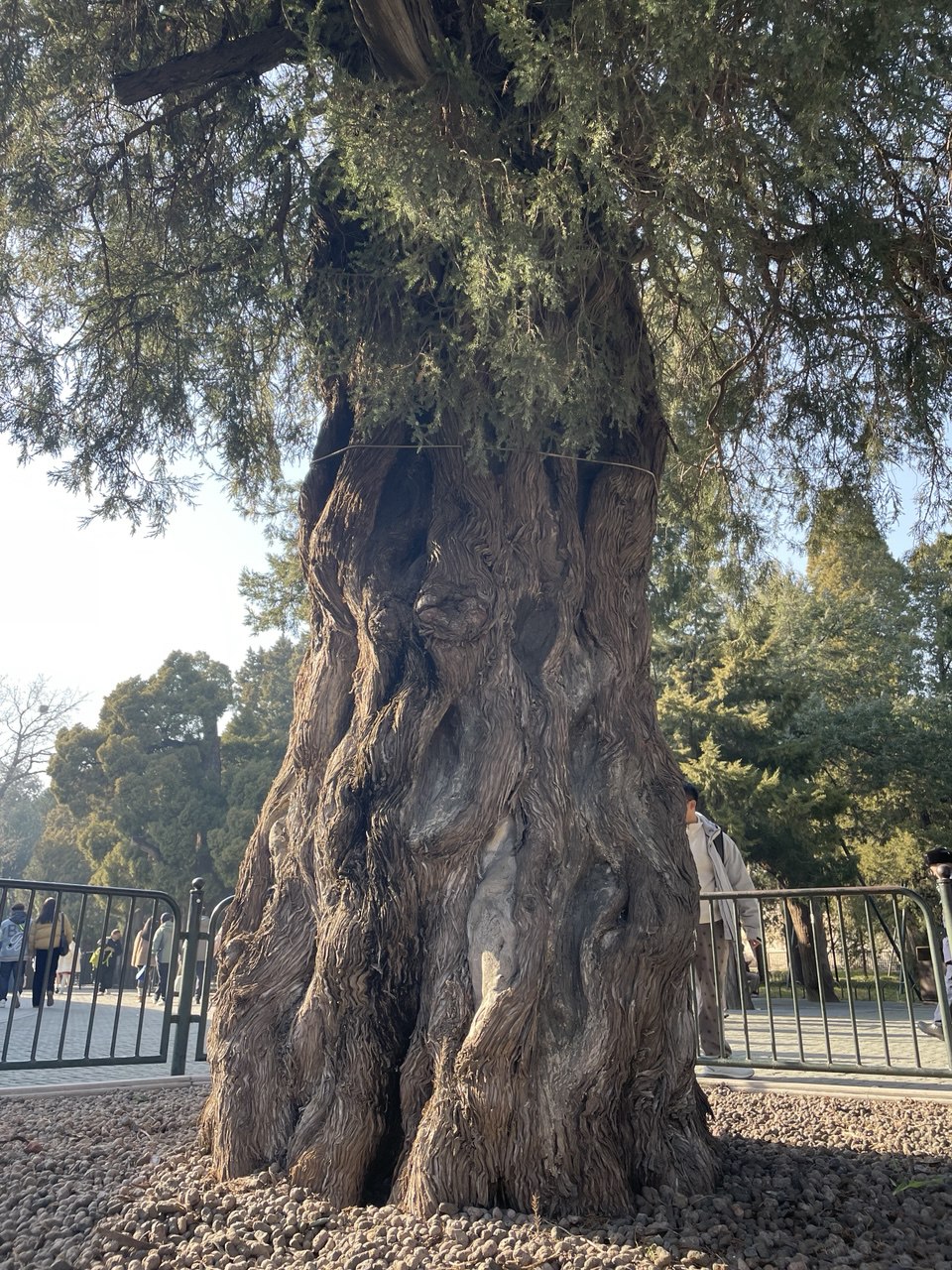
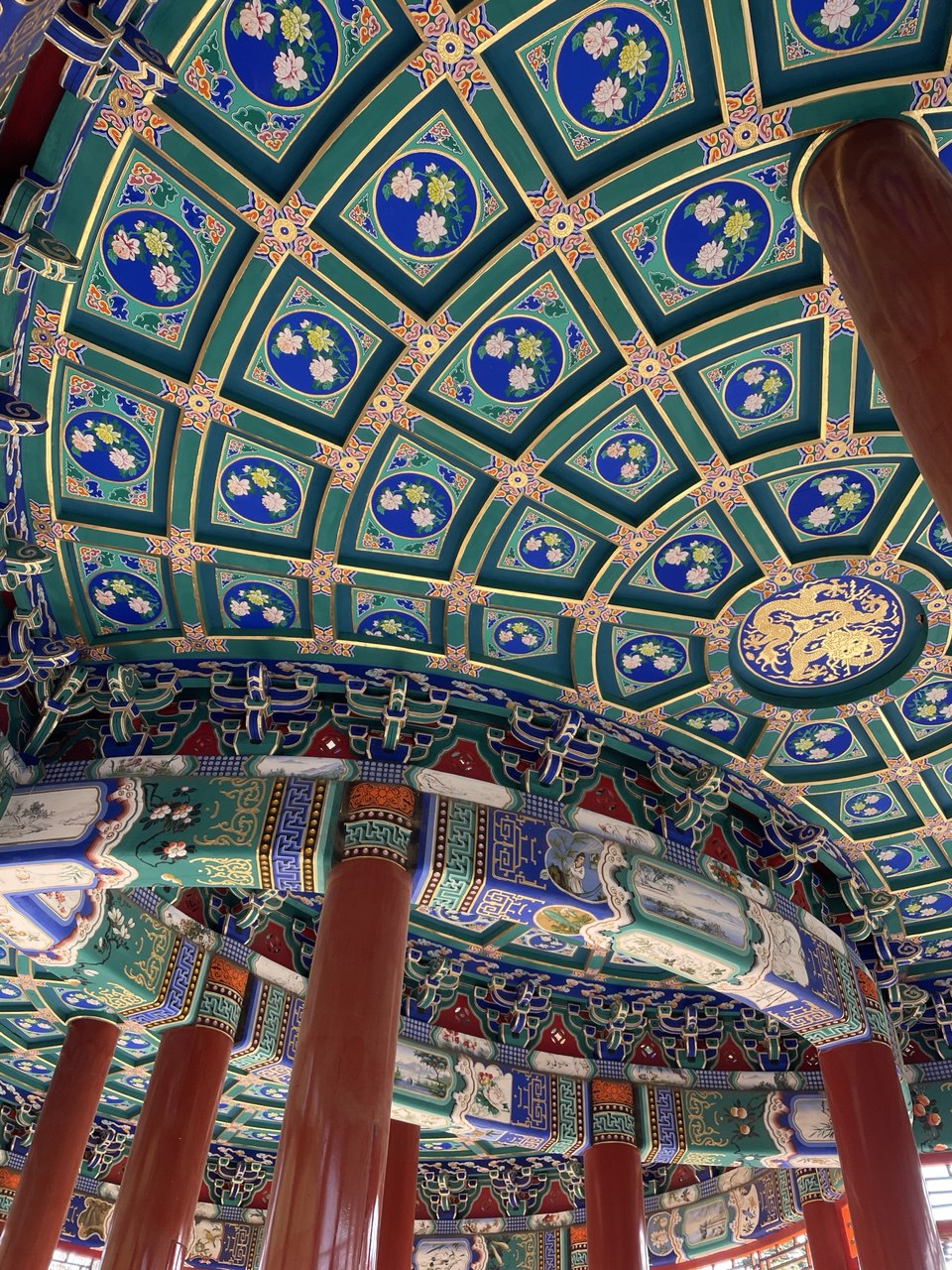
I also managed to drop by the park at the Temple of Heaven. I present to you the most beautiful Chinese juniper in the country, called "9 Dragons" and an interesting building that looks like a double peach.
Xiamen
Well, here I have practically nothing to tell: after all, tourism is tourism, and science is science, so I didn't take many photos in Xiamen. And the city isn't Beijing, although it's quite nice too.
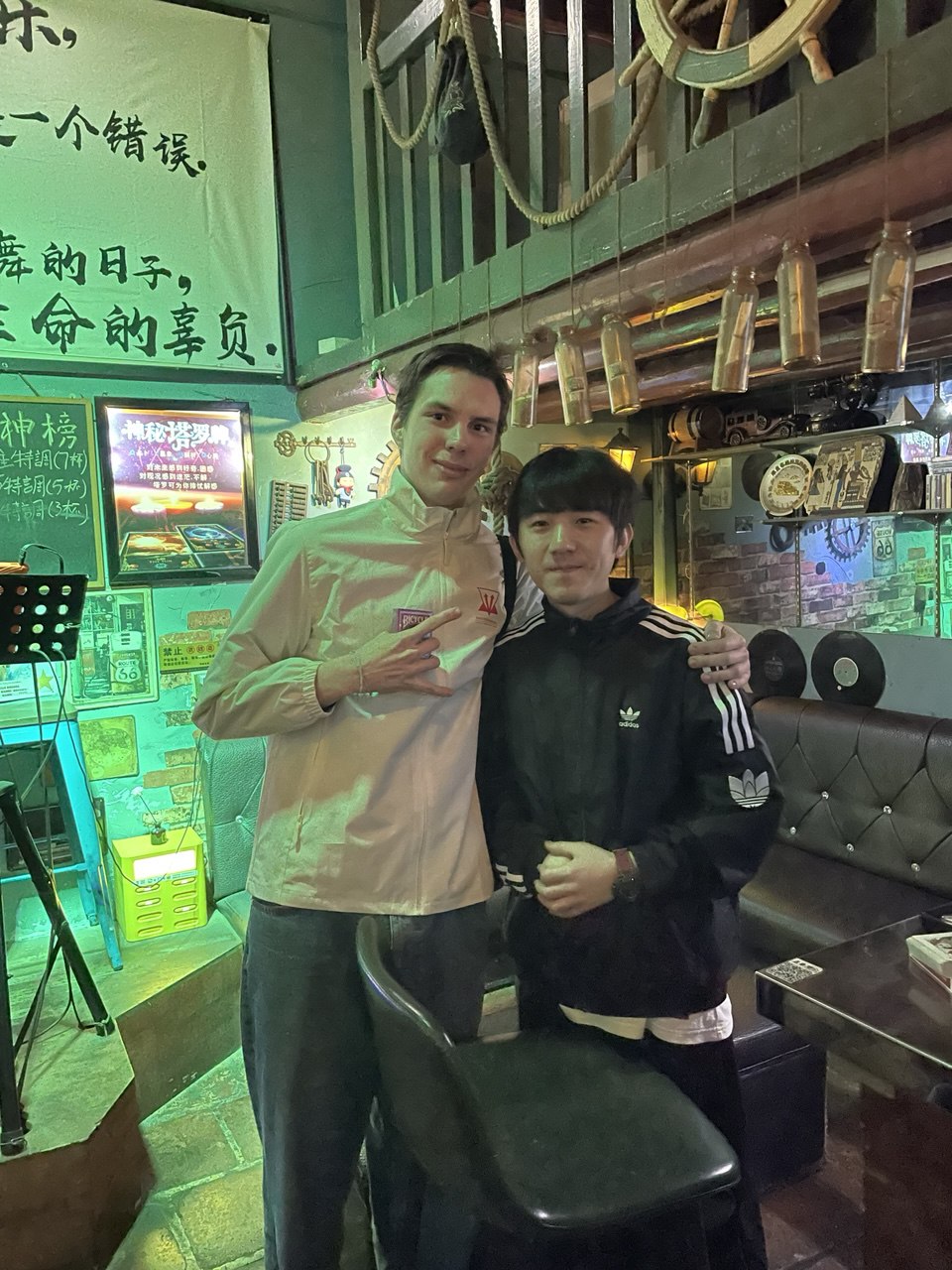
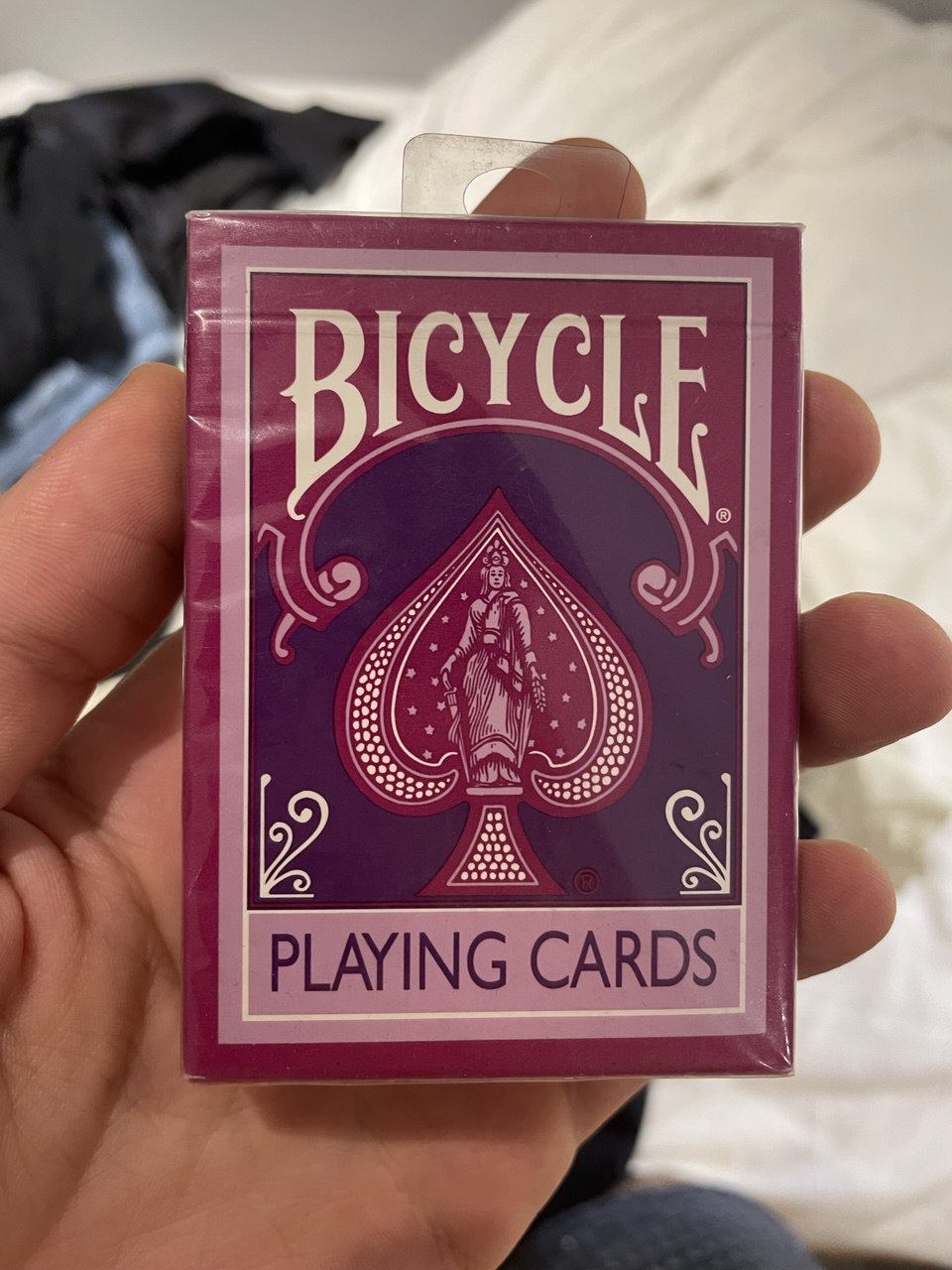
The only thing: I want to immortalize the kind bar owner. The story with him is this: I saw that at the entrance to a certain bar, there were good playing cards as if for ambiance. They had worn price tags on them, so I wanted to ask if they were for sale. I went in, and there was only one guy in the whole bar. I asked him and he asked in response if I was a magician. I said, well, yes. And he said to me: show me a trick. I somehow managed to show him what I could. He took the deck, showed me roughly the same thing, but 1000 times more spectacular and elegant, and then GAVE ME THE DECK. I still can't believe it. People in China are very hospitable.
That's about how my trip went.
a-for-short